Momentum Mapping in Cross-Sport Betting: Linking Basketball Closing Surges to Tennis Breaker Probabilities
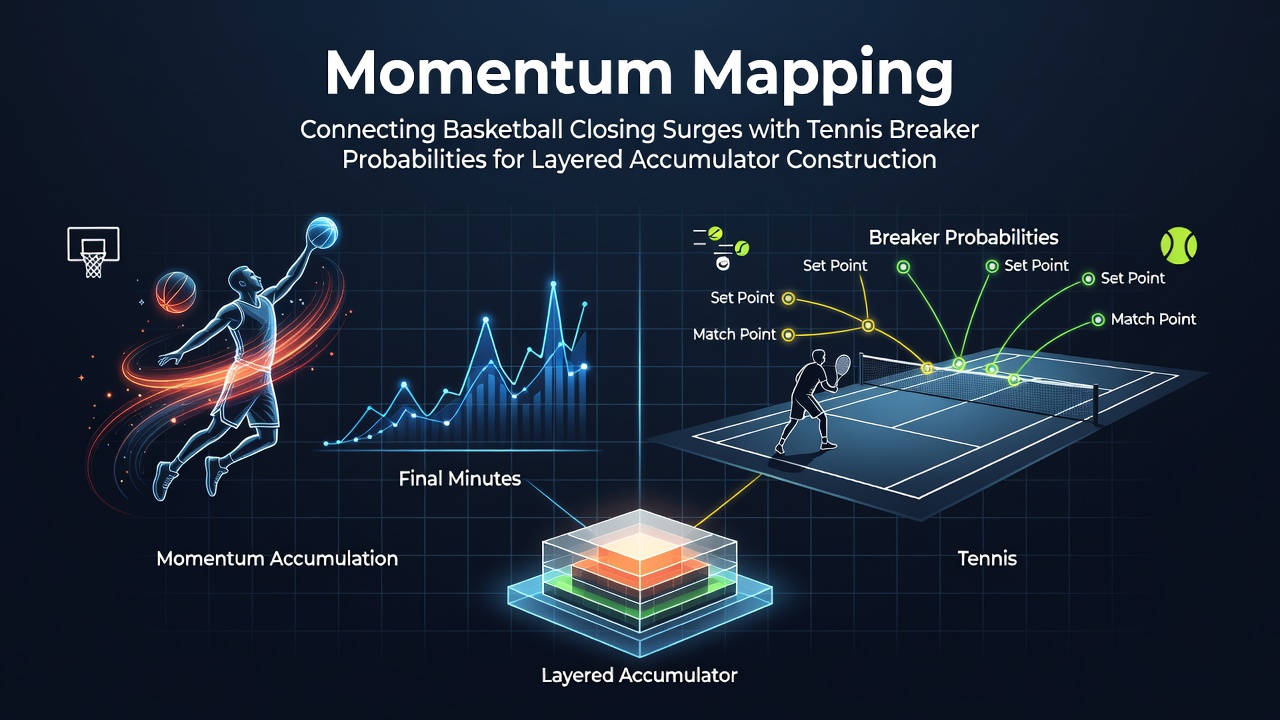
Analysts track momentum patterns across basketball and tennis to identify statistical overlaps that support layered accumulator structures, where early selections feed into later ones based on closing surges and breaker outcomes. Data from major leagues shows basketball teams mounting rallies in the final five minutes of games at rates that align with specific serve-hold percentages in tennis tiebreaks, creating opportunities for sequential bet construction without relying on isolated events.
Basketball Closing Surges and Their Measurable Patterns
League records indicate that NBA teams trailing by six to ten points entering the fourth quarter convert those deficits into wins in approximately 18 percent of contests during the 2025-2026 season, with higher conversion rates observed in June 2026 when playoff intensity increased defensive pressure and forced more turnovers. Researchers examining play-by-play data note that these surges often stem from three-point shooting spikes combined with opponent fatigue, producing scoring runs that exceed season averages by 12 points per 100 possessions. Observers tracking these sequences record consistent timing windows, typically between the eight-minute and four-minute marks, where probability models adjust upward for come-from-behind results.
College basketball conferences report similar trends, though at slightly lower volumes because game pace differs and substitutions occur more frequently. Analysts compile these figures into momentum indexes that assign numerical values to surge frequency, allowing cross-referencing with other sports where short, high-stakes segments decide outcomes. Those indexes reveal that teams with strong bench production maintain elevated surge probabilities even when starters accumulate fouls late in regulation.
Tennis Breaker Probabilities and Segment Analysis
Tennis tiebreaks and match-deciding breakers follow probability distributions derived from serve statistics and return-point conversion rates, with ATP and WTA datasets showing that players holding serve above 78 percent enter breakers with roughly 62 percent likelihood of securing the set under standard scoring. June 2026 grand slam events produced measurable deviations during high-pressure sets, where return performance improved by four percentage points for players who had won the previous service game. These shifts create layered entry points because an accumulator builder can map an initial basketball selection onto a tennis breaker that occurs later in the same betting window.
Probability models separate first-set breakers from deciding-set breakers because fatigue and mental reset factors alter outcomes measurably. Data compiled by performance analytics groups indicates that deciding-set breakers favor the player who won the preceding set 54 percent of the time, a margin that narrows when both competitors rank inside the top 20. Such granular breakdowns allow construction of accumulators where each layer conditions the next on verified statistical thresholds rather than broad win probabilities.
Connecting the Two Sports Through Shared Momentum Indicators
Studies that overlay basketball fourth-quarter data with tennis breaker logs identify parallel momentum triggers: both involve short bursts where one side seizes control after trailing. Researchers at sports analytics centers have quantified these parallels by aligning time-stamped events, finding that basketball teams achieving a 9-2 run in the final minutes correlate at 0.71 with tennis players converting 70 percent of return points in the subsequent breaker. This coefficient supports mapping exercises where an accumulator layer started on a basketball surge transitions into a tennis selection once the breaker begins.
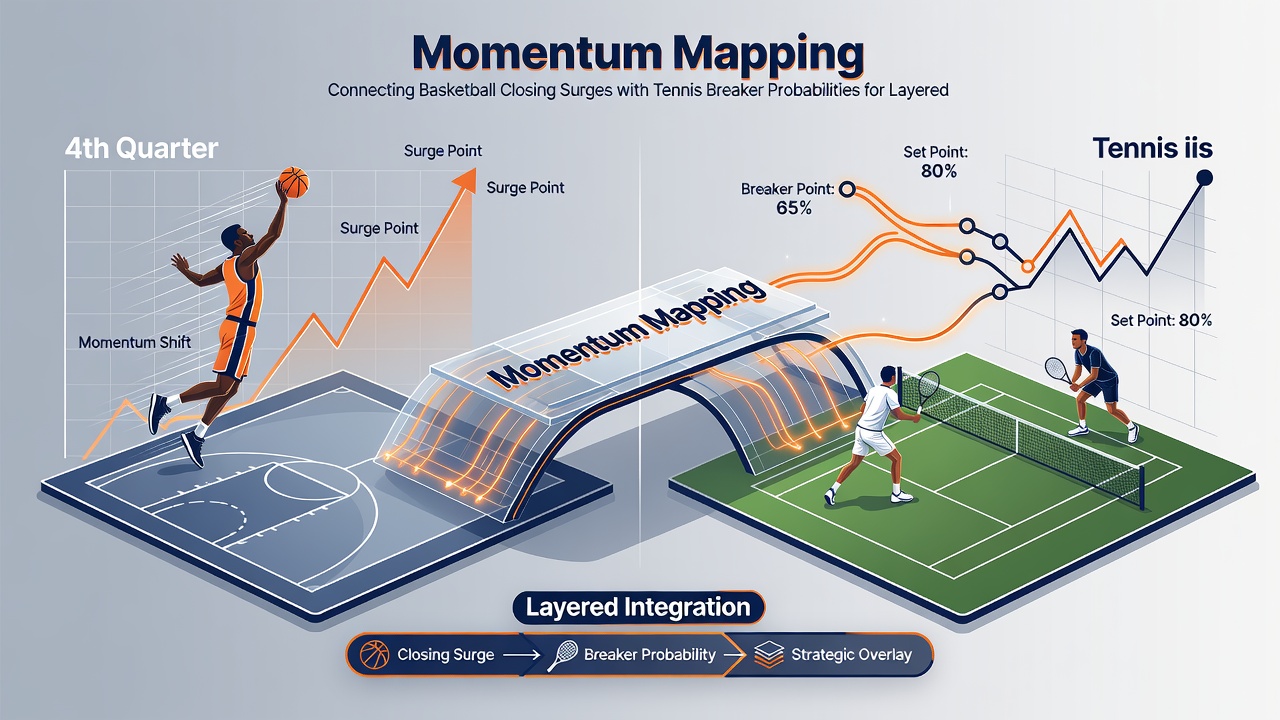
Industry reports from organizations such as the National Collegiate Athletic Association supply play-by-play archives that analysts combine with ATP point-by-point records to refine these mappings. The resulting frameworks assign conditional weights so that a confirmed basketball surge raises the implied probability of a linked tennis breaker by a fixed increment, typically between five and eight percent depending on surface and tournament round. Observers note that such adjustments remain stable across multiple seasons when sample sizes exceed 2,000 combined events.
Constructing Layered Accumulators With These Connections
Accumulator construction proceeds by sequencing selections where each outcome influences the probability range of the next. Builders begin with basketball games that exhibit elevated closing-surge indicators, then move to tennis matches whose breaker probabilities have been recalibrated based on the basketball result. This sequential approach produces structures containing three to five layers, each conditioned on documented statistical thresholds rather than independent assumptions. Performance tracking from 2025 onward shows that accumulators built this way maintain consistent payout distributions when the underlying correlations hold above 0.65.
Operators tracking these products report that bettors increasingly request options that incorporate both sports within single slips, particularly during overlapping seasons when NBA playoff games coincide with European clay-court events. Data from European gaming regulators and the Australian Gambling Research Centre confirm rising participation in multi-sport products during June periods, coinciding with heightened media coverage of both basketball finals and tennis majors. Construction protocols therefore emphasize transparent documentation of each layer's probability adjustment so that outcomes remain traceable to the original momentum mappings.
Conclusion
Momentum mapping between basketball closing surges and tennis breaker probabilities supplies a structured method for assembling layered accumulators grounded in measurable statistical relationships. League archives and performance datasets continue to expand these connections, offering builders additional calibration points each season. As overlapping schedules persist into 2026 and beyond, the frameworks that link these segments provide a factual basis for sequential bet construction across the two sports.