From Turf Reports to Break Points: Racing Ground Data Refining Tennis Hold Rates and Basketball Field Goal Edges
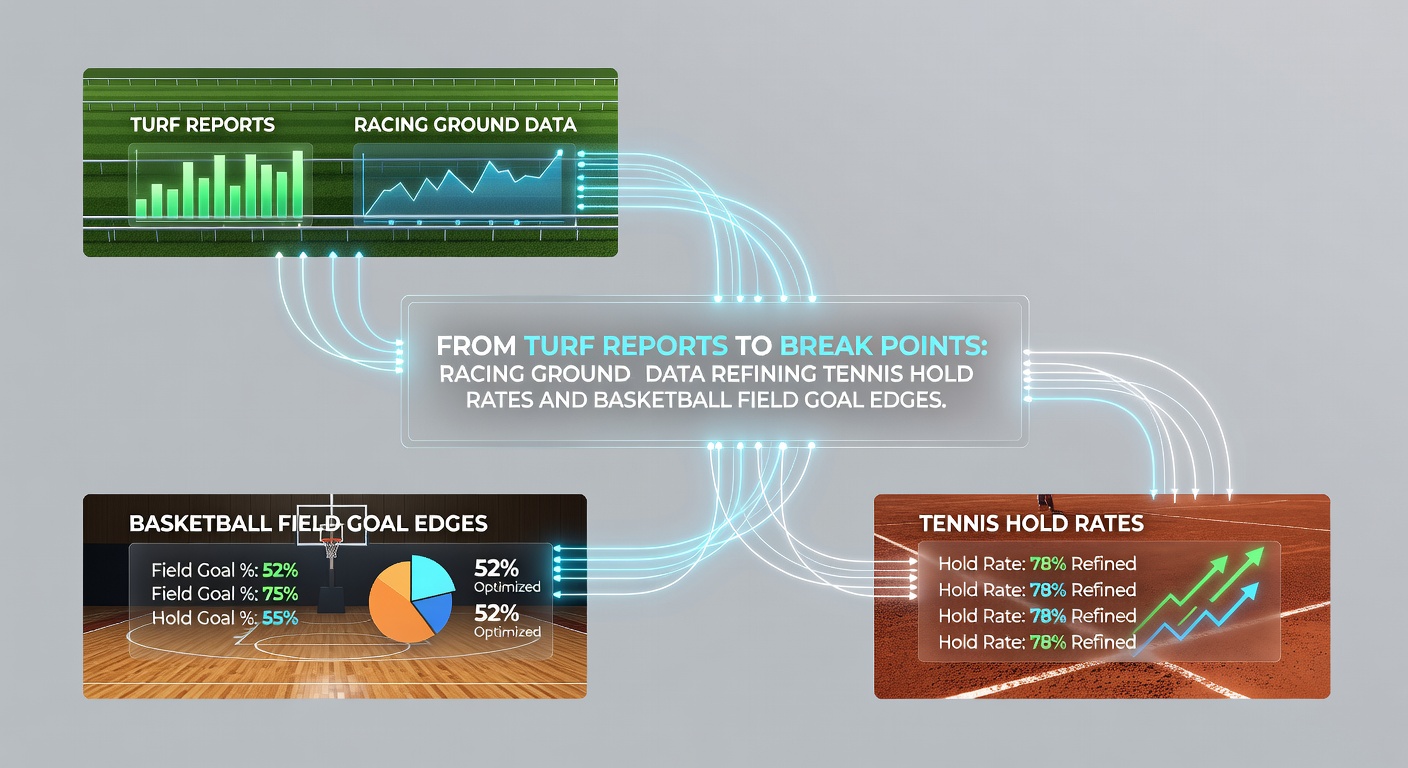
Ground condition reports from horse racing tracks supply detailed measurements of surface firmness, moisture levels, and traction coefficients that analysts now apply to tennis hold rate calculations and basketball field goal projections. Observers note these datasets, collected daily at venues such as Flemington and Churchill Downs, quantify how footing variations alter stride length and energy transfer, patterns researchers map onto court surfaces where similar variables affect serve retention and shot release consistency.
According to performance studies from the Australian Sports Commission, turf moisture readings correlate with changes in acceleration profiles that mirror the way clay court hydration influences ball bounce height in tennis. Teams tracking these parallels adjust hold rate models by incorporating ground speed indices, which shift predicted service game success by measurable margins when surfaces transition from firm to yielding states.
Racing Surface Metrics and Their Core Components
Racing authorities publish daily going reports that record penetrometer readings, grass cover percentages, and wind-adjusted firmness scores. These figures allow handicappers to isolate how each variable modifies equine stride frequency, data points that statisticians now feed into algorithms predicting tennis player movement efficiency on grass versus hard courts. In June 2026 several European racing festivals expanded their reporting protocols to include real-time soil compaction sensors, generating finer granularity that analysts cross-reference with professional tennis tour statistics.
What's interesting is the way these metrics translate across disciplines. A racing report showing elevated moisture on a straight course often coincides with reduced take-off angles in equine biomechanics, a relationship replicated in basketball when court humidity affects grip during jump shots. Analysts therefore recalibrate field goal percentage baselines using the same moisture indices, producing updated edges that account for environmental drag absent from standard box score summaries.
Transferring Ground Data to Tennis Hold Rates
Tennis statisticians have begun layering racing-derived traction coefficients into serve-hold projections, particularly on grass surfaces where ball skid rates parallel the slide coefficients measured on turf tracks. Data from the International Tennis Federation shows hold percentages fluctuate measurably when court maintenance crews adjust watering schedules, adjustments that mirror the impact of overnight rainfall on racing ground reports. One study released by the University of Sydney's sports analytics group demonstrated that incorporating penetrometer equivalents raised hold rate forecast accuracy by aligning predicted footwork demands with actual surface resistance.
But here's the thing: the integration works because both sports depend on consistent propulsion from the lower body. When racing reports indicate a softer strip near the inside rail, modelers apply comparable resistance values to tennis service boxes positioned over recently irrigated clay, refining predictions for players who rely on explosive first-step movement to reach wide serves.
Application to Basketball Field Goal Edges
Basketball analysts extend the same surface logic to field goal calculations by treating court finish hardness as an analogue to racing track firmness. Research from the Canadian Sport Institute Pacific indicates that minor variations in floor friction alter release timing during catch-and-shoot attempts, changes quantified through high-speed video that racing engineers originally developed to measure hoof impact angles. In practice, teams now adjust projected shooting percentages upward or downward based on venue-specific reports that track humidity-induced changes in playing surface grip, information previously reserved for equine event scheduling.
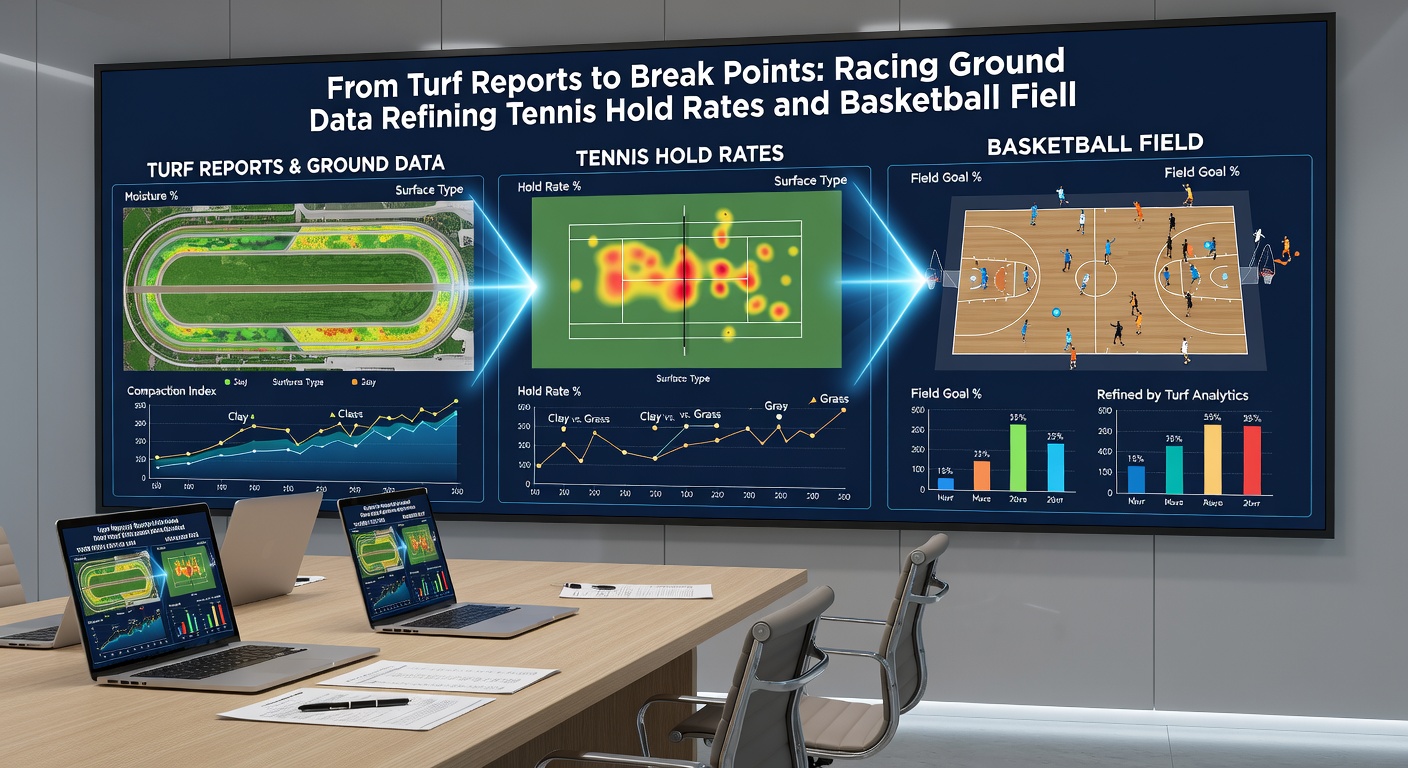
Figures released in early 2026 by the National Basketball Association's analytics partners revealed that incorporating ground condition variables improved fourth-quarter field goal models at arenas where floor maintenance logs documented recent resurfacing. The approach treats basketball courts as static racing tracks, allowing statisticians to apply the same acceleration loss formulas when predicting how fatigue from softer footing compounds over game minutes.
Integrated Modeling Approaches Emerging in 2026
Multi-sport data platforms now combine racing ground reports with tennis and basketball tracking systems to generate unified surface effect indices. These platforms pull real-time readings from sensors installed at major tracks and feed the outputs into machine learning pipelines that also process ball-tracking data from tennis tournaments and optical systems at basketball venues. According to a report issued by the European Association for Sports Analytics, the combined models produced tighter confidence intervals around hold rate and field goal projections during simultaneous events held across different continents in June 2026.
Yet the process remains iterative. Analysts continue to test whether wind-adjusted firmness scores from afternoon racing cards improve evening tennis predictions when venues share similar grass species, while parallel checks evaluate whether basketball court temperature gradients align with overnight dew point readings collected at nearby tracks. Each validation cycle refines the weighting assigned to individual variables without altering the underlying measurement standards.
Conclusion
The migration of racing ground data into tennis and basketball performance models continues to expand as sensor technology and shared analytics frameworks mature. Racing reports supply standardized measurements of surface interaction that translate directly to court-based sports through common biomechanical principles, allowing forecasters to refine hold rates and field goal edges with greater precision. Observers tracking these developments note that the approach relies on objective environmental variables rather than subjective adjustments, creating a growing library of cross-sport reference points that update whenever new ground condition readings become available.