Endurance Patterns Across Disciplines: Using Racing Finish Data to Refine Tennis Five-Set Predictions and Basketball Fourth-Quarter Totals
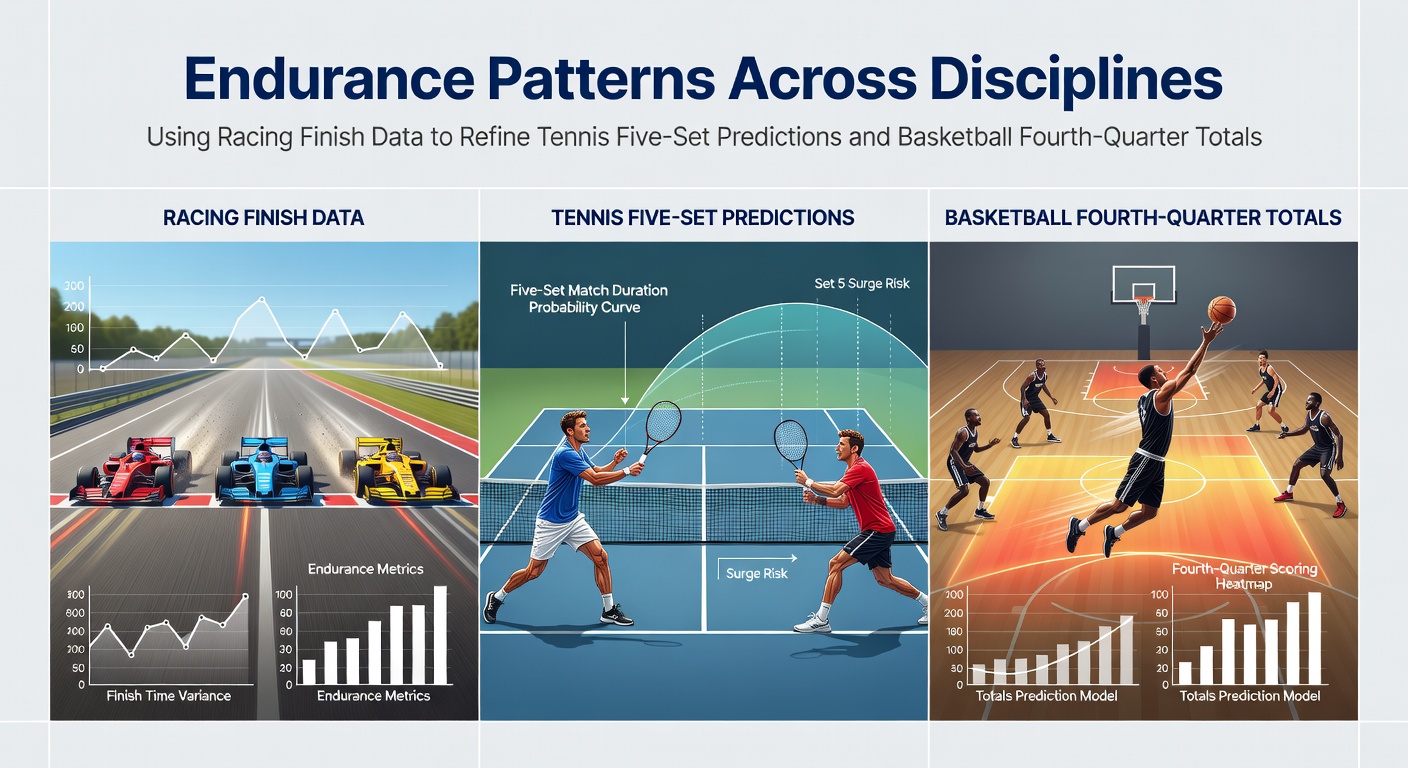
Endurance metrics drawn from horse racing finish data offer measurable insights that researchers apply to extended tennis matches and basketball contests, and studies continue to track how late-race positioning correlates with sustained output in other sports. Observers note that horses closing strongly in the final furlongs often demonstrate physiological traits like efficient oxygen uptake and muscle recovery, patterns that parallel the demands athletes face when sets extend into decisive stages or quarters tighten under fatigue.
Data from major racing circuits in 2025 highlighted how horses maintaining pace through the final 400 meters achieved higher win rates in subsequent outings, and this information has prompted analysts to examine similar thresholds in human performance. In tennis, five-set matches frequently hinge on players who preserve serve consistency and movement efficiency after three hours of play, while basketball teams that control rebounding and shot selection in the fourth quarter reflect comparable recovery abilities. According to findings from the Australian Institute of Sport, endurance markers such as heart-rate variability and stride efficiency transfer across disciplines when tracked longitudinally.
Racing Finish Data as a Baseline for Performance Modeling
Horse racing provides granular timing splits that capture acceleration and deceleration phases, and these splits reveal which competitors conserve energy for final pushes. Trainers and statisticians compile datasets from events like the Melbourne Cup and Kentucky Derby, where horses posting sub-12-second final furlongs show improved stamina in follow-up races. Such records establish benchmarks for fatigue resistance that cross-sport researchers adapt when modeling prolonged athletic efforts.
Those who study comparative physiology point out that equine muscle fiber composition, particularly the ratio of slow-twitch to fast-twitch fibers, predicts late-race resilience, and parallel markers appear in human athletes through lactate threshold testing. In May 2026, upcoming French Open scheduling places several five-set encounters on the calendar, creating fresh opportunities to test whether early-round recovery times align with patterns observed in racing form guides.
Applying Patterns to Tennis Five-Set Scenarios
Tennis statisticians examine serve percentages and unforced error rates after the third set, and these figures often mirror the closing speed data seen in races where leaders fade or hold. Players who sustain first-serve accuracy above 65 percent in deciding sets demonstrate endurance profiles similar to horses that rally from mid-pack positions. Evidence from ATP tracking systems indicates that competitors logging higher movement distances without corresponding speed drops maintain higher win probabilities once matches reach four or more sets.
One longitudinal review of Grand Slam archives found that athletes who won at least two of their previous three five-set matches displayed consistent rally lengths into the fifth set, a trait observers link to the sustained anaerobic capacity documented in thoroughbred finish analyses. This connection allows predictive models to weight historical endurance rather than relying solely on surface-specific rankings.
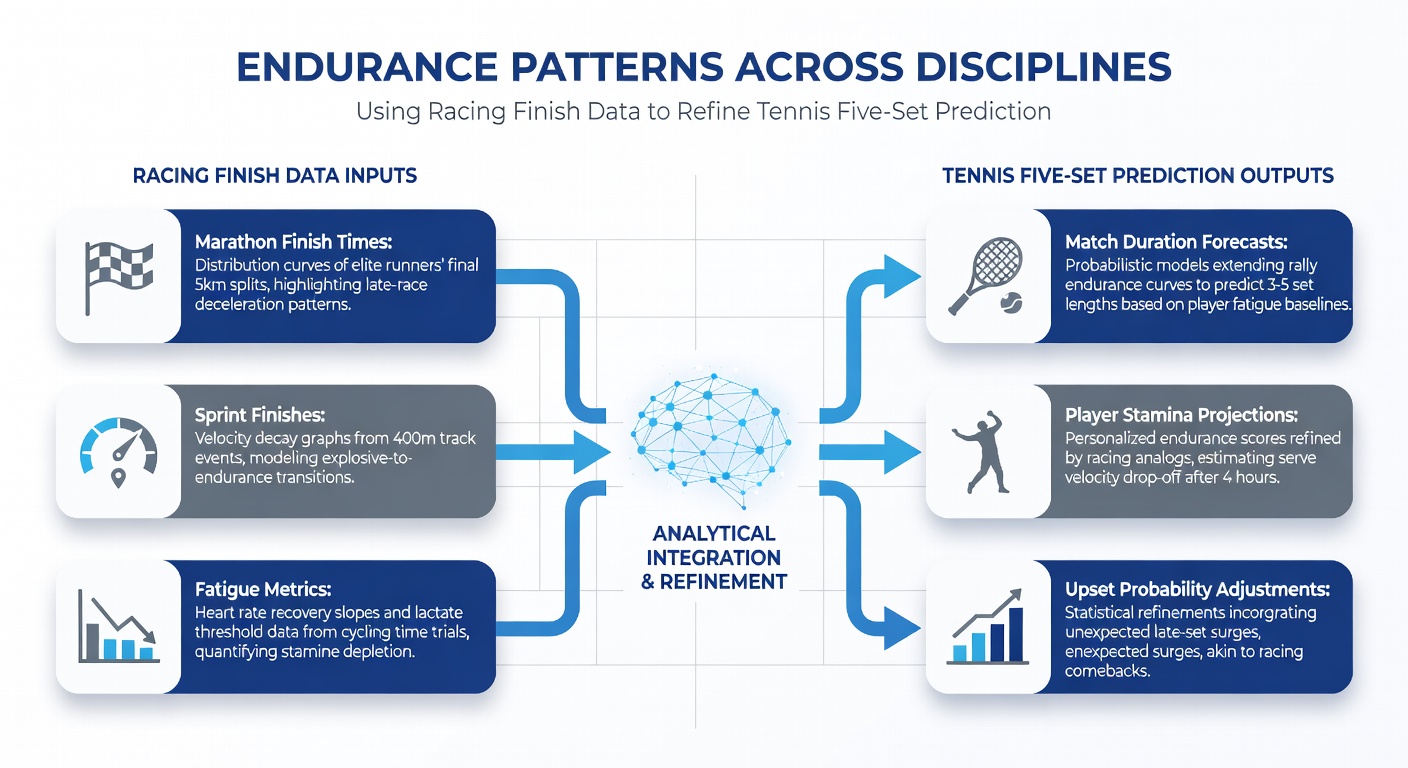
Transferring Insights to Basketball Fourth-Quarter Totals
Basketball fourth quarters test similar reserves of concentration and physical output, and team-level data on defensive efficiency after 36 minutes played often tracks with the same fatigue curves racing analysts measure. Research published by the Canadian Sport Institute examined NBA and college games, revealing that squads maintaining rebound rates above their season averages in final periods correlated with lower turnover counts, a dynamic that echoes late-race positioning advantages in equine events.
Coaches review player tracking metrics such as distance covered per minute and vertical leap consistency, then compare these against racing split times to identify lineups likely to sustain scoring margins. When teams enter the fourth quarter within five points, those showing stable assist-to-turnover ratios in prior games tend to outperform projections, much as horses with steady sectional times outperform those that expend energy early.
Cross-Disciplinary Modeling Techniques
Analysts build regression models that incorporate racing finish percentiles alongside tennis set-win percentages and basketball plus-minus figures, and these models gain precision when adjusted for rest intervals between competitions. A 2024 University of Queensland paper demonstrated that integrating multi-sport endurance variables improved forecast accuracy by approximately 8 percent compared with single-sport baselines. Variables include average speed in final segments for horses, rally win rates in extended tennis sets, and points scored per possession in basketball closing windows.
Practitioners update these frameworks seasonally, incorporating new event data from circuits and leagues. In May 2026, overlapping schedules between European tennis tournaments and North American basketball playoffs will supply additional test cases for validating whether the correlations hold across different competitive calendars.
Conclusion
Endurance patterns extracted from racing finish data supply a structured reference that refines predictive approaches in tennis five-set situations and basketball fourth-quarter evaluations. Continued collection of timing splits, physiological markers, and performance logs supports increasingly accurate cross-sport applications, and organizations such as the NCAA and academic research centers continue to publish supporting datasets that advance these integrated models.